Showing posts with label OFPP news. Show all posts

Friday, January 18, 2008

Latest News

Frequent visitors might have noticed the Orangutan Blog has gone a little quiet in the past few months. We are still active in Indonesia, and heavily involved in forest conservation issues, but we are working on a number of different projects.

On the orangutan front we are currently working with SOS to provide them with more films for their roadshows that are running our in the field throughout 2008, and we hope to join them in the field at some point this year to get feedback from the audiences and help us refine our outreach work as we go. It also helps to have filmmakers on hand to answer questions and to further enthuse the audience about the importance of conservation of the areas where we work.

For those of you have have stumbled across this site as a standalone blog - you should visit our more fully encompassing website of Films4Conservation - which manages the Orangutan Film Protection Project, but which also works specifically on issues of palm oil, and of social and land rights issues.

Visit www.films4.org and be sure to check out our most recent projects which we are currently editing www.films4.org/forests

See you there!

Friday, March 23, 2007

Friends of the Earth and Ape Alliance 's Palm Oil Campaign wins Observer Food Monthly award

Cockroach Productions' work on Palm Oil recognised again by the Observer:

Press Release:

Friends of the Earth and Ape Alliance 's Palm Oil Campaign wins Observer Food Monthly award

Mar 22 2007

Friends of the Earth and Ape Alliance have won an Observer Food Monthly (OFM) Award for their campaign to help stop the trade in palm oil from driving the Orangutan towards extinction. The campaign was launched in 2005 in partnership with the Ape Alliance Palm Oil Working Group, which includes Orangutan Foundation, Sumatra Orangutan Society, Borneo Orangutan Survival Foundation and Cockroach Productions.

Palm oil is found in one in ten products on the su permarket shelves including bread, crisps, margarine and cereals to lipstick and soap. The clearance of large tracts of rainforest in east Malaysia and Indonesia for palm oil plantations is the primary cause of the Orangutan's decline - as well as thousands of other species – these are some of the most bio-diverse forests on earth!.

Since its launch the campaign has notched up many successes including:

Attracting global attention to the devastating impact which the palm oil industry has on the Orangutan, their rainforest habitat and the communities who live alongside them.
Highlighting the need to strengthen company law so that companies are legally required to report on the social and environmental impacts of their supply chains.

Persuading all the major supermarkets to join a Roundtable on Sustainable Palm Oil. The Roundtable is an association of business and non governmental organisations seeking to promote sustainable palm oil.

Helping to stop a mega palm oil plantation in Borneo, . The plantation would have led to the destruction of two million hectares of pristine forest - an area the size of .

Friends of the Earth is continuing to campaign to ensure UK supermarkets deliver on their pledge to use only sustainable palm oil and is working to ensure that the growing demand for biofuels doesn't lead to even greater destruction of the Orangutan's home forests. The organisation is calling on the UK Government to ensure no palm oil is imported for bio-fuel.

Friends of the Earth Palm Oil Campaigner, Ed Matthew said:

"We are delighted to have won this award. We have achieved a huge amount over the last few years but the sad fact is that the rainforest in and continues to be destroyed at an alarming rate and the Orangutan is still gravely threatened. Now the use of palm oil as a bio-fuel could push the Orangutan over the edge. The UK Government must ensure no palm oil is imported for use as bio-fuel."

The Ape Alliance Palm Oil Working Group has produced a postcard for people to send to their MPs and MEPs on the issue of palm oil and bio-fuels. Click here to find out more.

Friends of the Earth's Ed Matthews, with Helen Buckland of SOS and Ian Redmond of Ape Alliance, received the award from Alex James of Blur and Nicola Jeal, editor of OFM at a ceremony in London on 22 March. The awards, now in their fourth year, recognise and reward those who have made a contribution to the food industry for the better.

Winners were selected by a combination of OFM (OFM) reader votes and a celebrity judging panel which included: cookery expert Nigel Slater; Ruth Rogers, of the River Café; Tom Conran, restaurateur; Joanna Blythman, food writer; Jay Rayner, Observer restaurant critic; Robbie James, Waitrose; Caroline Boucher, deputy editor OFM and Nicola Jeal, OFM editor and chair of the judging panel.

For further information, contact:

Ape Alliance : 01453 765 228 or visit www.4apes.com/palmoil for contact details of the Ape Alliance Palm Oil Working Group members.

Check out the video evidence at www.films4.org/palmoil
Contact Nick @ Films4Conservation: 01823 451 790; nick@films4.org

Friends of the Earth
26 - 28 Underwood St.
LONDON
N1 7JQ

Tel: +44 20 7490 1555
Fax: +44 20 7490 0881

Wednesday, October 25, 2006

Films4Apes

For a while now we've been thinking of how to make ape films more widely available for conservation purposes. Our friends at GAFI manage to take films back to ape native range states, so the people who live with apes can learn about apes. This is how our Orangutan films are distributed in the field. But we wanted to make our films, and others, available to anyone who had an internet connection. Last week we were at WildScreen - "The Green Oscars" - the biggest natural history film festival in the world. It became apparent that a lot of people felt similarly that there was a need to have an online resource for conservation films.

After a discussion with Ian Redmond (UNEP/UNESCO GRASP & Ape Alliance) and Richard Brock (Brock Initiative & former senior BBC Producer) we designed this site to try and help people access rich media on apes. There are live RSS feeds, online slideshows and most excitingly - we are collecting conservation videos on apes. Please come and visit, and help us make this site grow. We are also in the formative stages of setting up Films4Tigers and Films4Elephants will follow. But for now drop by:

Films4Apes

See you there,
Nick & Evie

Producer, Orangutan Film Protection Project.

Friday, October 06, 2006

Cockroach inspire Miller Advert

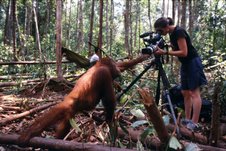
One of our kit sponsors, Miller Camera Support in Australia, recently sent us this image. Taking inspiration from the production still below, the image has been touring the world in their trade fairs. Whilst the interpretation of the orangutans has obviously been subject to creative license, the camerawoman is clearly a spitting image of Evie!

Cockroach Productions Inspires Miller Advert


Investigating the camera

Wednesday, August 02, 2006

Morrisons to Join RSPO

Congratulations Letter Writers and Postcard Senders!


Morrisons have just announced that they are joing the RSPO, which means together we have managed to get that huge step forward in the campaign by getting all FIVE of our target supermarkets in the UK to sign up to principles of sustainability on palm oil. Next job: we need to get some politcal will-power in SE ASIA to only pursue sustainable palm oil production. More news on that will be coming soon. Meanwhile here is Morrisons' press release:

Morrisons to join Roundtable on palm oil

2nd August 2006

Morrisons has announced its intention to join the Roundtable on Sustainable Palm Oil (RSPO), to further demonstrate its commitment to the responsible sourcing of this ingredient and to help promote the growth and use of sustainable palm oil.

The company will continue to work with its suppliers to make progress in ensuring that any palm oil used in own brand products is from verifiable, sustainable sources.

“We have always been in accord with the aim of the RSPO and to address the issue, we focused on working directly through our supply chain”, said Corporate Affairs Director, Chris Blundell. “Given the global nature of the palm oil market there is the need for collective action on an international basis and the Roundtable process provides the best means of achieving this.”

Thursday, June 22, 2006

Momentous Breakthrough in Campaign!

TESCO Joins the Roundtable on Sustainable Palm Oil, finally!!! Thank you to all our letter writers for your continued support and the pressure you have put on TESCOs - you have been successful.
And here is their press release:

TESCO TO JOIN SUSTAINABLE PALM OIL GROUP

Tesco today announced that it will join the Roundtable on Sustainable Palm Oil to help the industry identify ways of sourcing this widely used ingredient more responsibly.

Announcing the move, Group Corporate and Legal Affairs Director, Lucy Neville-Rolfe said:

"We are deeply concerned about the loss of rainforest - and the orangutans it supports - and believe that we can make a real contribution to work in this important area.

"It is a complex problem and our technical team have learnt a lot about the issue over the last two years and we hope that by sharing our knowledge and ideas, we will make a positive contribution and help to make a difference.”

Stanley Jonhson, former MEP and senior advisor to United Nation's Great Apes Survival Project (GRASP) welcomed the statement:

"This is tremendously good news. Given the enormous range of products containing palm oil marketed by Tesco in stores across the UK, it is vital that Tesco should join the Roundtable on Sustainable Palm Oil – as they now have. And given Tesco's increasing international operations, constructive participation from Tesco is likely to be even more important in the future."

Tesco House, PO Box 18, Delamare Road, Cheshunt, Herts EN8 9SL
Press Desk - Tel: 01992 644645

Wednesday, June 07, 2006

OFPP back in the field

We're back off to Indonesia tomorrow for a month's filming to complete the conflict mitigation training video. This video will show plantation workers what do when they encounter an orangutan - showing how to best ensure their personal safety and the safety of the orangutan. We will be working the Borneo Orangutan Survival Foundation to create a number of reconstructions to complete the training video. We'll try and keep you up to date while we're away.

We should remain in email contact periodically - so please drop us a line at info@cockroach.org.uk
We will return to the UK on the 9th of July. We plan to have the video completed by mid-July

Wish us luck!

Friday, May 12, 2006

BBC1 16:30 Really Wild Show, Weds 17th May

Palm Oil story reaches a Younger Generation

Those of you in the UK keep your eyes peeled for the Really Wild Show on the BBC this Wednesday (May 17th) at 4:30pm. The show will feature a special report on the palm oil industry and its negative implications for the protection of rainforests and biodiversity in Indonesia and Malaysia.


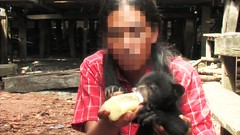
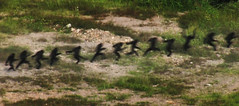
Some of the footage shot by Cockroach Productions on location in Borneo and Sumatra will be included in the report, including rare film of a captured baby sun bear, a baby macaque being kept as a pet in a palm oil plantation in Central Sumatra, and an unusual shot of a (completely arboreal) gibbon running bipedally across cleared forest land.


Hopefully the show will inspire a new generation of budding conservationists to join the campaign.

Tuesday, May 02, 2006

Orang-utan campaign heads to Westminster

Tuesday, 02 May 2006 08:35 Copyright InTheNew.co.uk

Orang-utan campaign heads to Westminster

Leading members of Britain's campaign to save endangered orang-utans are to lobby MPs at a Westminster reception this evening.

Hosted by Lib Dem MP Norman Baker and organised by Friends of the Earth, the event will be attended by prominent orang-utan campaigners including celebrity actress Joanna Lumley.

They will attempt to highlight the plight of the orang-utans, whose rainforests are being steadily destroyed by Britain's demand for palm oil, in an attempt to gain changes to the company law reform bill currently passing through parliament.

"Demand for palm oil is threatening the survival of these fantastic creatures and it is shocking that our demand for cheap food and other products is behind this," Mr Baker, the party's environmental affairs spokesperson, said.

"I believe we must take this opportunity to use the company law reform bill to ensure that UK companies take more responsibility for the impacts they have on the environment."

At present British supermarkets including Tesco, Somerfield and Morrisons are refusing to subscribe to an agreement on the "sustainable use" of palm oil, showing a disinterest the bill could forcibly change.

"The growth in demand for palm oil is putting pressure on precious areas of rainforest in Borneo and Sumatra, threatening the survival of the orang-utan," Friends of the Earth oil campaigner Ed Matthew said.

"MPs have the power to do something about this and we urge them to take this chance."

Palm oil, harvested from the rainforests of Borneo and Sumatra, can be found in one in ten products sold in Britain's supermarkets.track
_____________________________________
The Orangutan Film Protection Project Team from Cockroach Productions will be attending this event and showing a video report from Indonesia, highlighting the plight of orangutans and local people in the face of the growing palm oil industry. Our hope is to rally British Government support for the sustainable sector of the industry, being led by the Roundtable on Sustainable Palm Oil.

Find out more at www.cockroach.org.uk

Tuesday, April 25, 2006

Orangutans WILL go home!

Subject: RE: Press release - Orangutans will go home!


53 of 61 smuggled orangutans will be sent home soon

April 23, 2006

On Saturday the 22nd of April 2006, officials from Thailand's Department of National Parks, Wildlife and Plants announced their decision to allow 53 smuggled orangutans to go back home to the forests of Indonesia. The decision was made during a meeting between Thai and Indonesian officials in Bangkok. A large group of NGO's worldwide campaigned hard to have the Apes repatriated after two and a half years being kept in sub-standard conditions at Safari World, Bangkok and wildlife breeding centers in Thailand. The pressure of the campaign, which was stepped up only six months ago, finally bears fruit.


Although the Thai authorities still want to check DNA of all the orangutans to verify that the animals originate from the Indonesian part of Borneo, scientists and experts believe all but two are from this area. Two of the orangutans might be Sumatran orangutans and therefore also Indonesian. The Indonesian authorities have agreed to allow the second DNA test so long as it does not delay the repatriation process. The animals will be returned to Indonesia before the results of the DNA check are available. Two years ago, DNA tests, financed by the Borneo Orangutan Survival Foundation (BOSF) in cooperation with the Thai Forestry Police, were conducted to prove that these same orangutans were not born of the legal orangutan stock at the zoo.


The 53 orangutans will all be moved to the Nyaru Menteng Orangutan Rehabilitation Center, run by the Borneo Orangutan Survival Foundation. It is expected that the first half of the orangutans will be shipped back to Indonesia within the next eight weeks; a second group should follow within four weeks after the first. Due to the level of care required for each individual animal, transporting too large a group at one time will be too stressful for the animals.

Veterinary and orangutan experts from BOSF and the Indonesian government will soon begin a thorough health assessment to check all the orangutans for zoonotic diseases such as tuberculosis and hepatitis, as well as the presence of parasites, bacteria and fungi. Local Thai universities such as Chulalongkorn and/or Mahidol might be asked for assistance with this process. If animals are not 100% healthy, the stress of transportation might be detrimental and, in some cases, fatal. The healthiest ones will be returned with the first lot.


At Nyaru Menteng, all facilities are ready to welcome the orangutans back home; a quarantine area and new living quarters have all been constructed in the past two years awaiting the return of these orangutans.

The fate of eight additional orangutans held by the Thai authorities confiscated from Lopburi zoo and two slaughterhouses in 2003 is not yet known.

For more information and pictures:

Edwin Wiek
Monitoring unit for cross-border illegal wildlife trade
Borneo Orangutan Survival Foundation
edwin.wiek@wfft.org
Wildlife Friends of Thailand (www.wfft.org)
Tel +6690600906 (Thailand 0906-00906)

Dr. Willie Smits
Borneo Orangutan Survival Foundation / Gibbon Foundation
wtmsmits@indo.net.id

Lone Droscher Nielsen
Director
Nyaru Menteng Orangutan Rehabilitation Center
Project.o-u@lycos.com
Tel: +62-8125154702 (Indonesia 081-25154702)

All photographs Copyright Nick Lyon & Evie Wright
The Orangutan Film Protection Project
www.cockroach.org.uk
Tel: +44 (0)1823 451 790

Wednesday, April 19, 2006

Better Late than Never

Well done Sainsburys for joing the Roundtable on Sustainable Palm Oil! After an announcement at the end of January, Sainsburys have finally filed their application for the RSPO and, in doing so, joins the likes of ASDA, Waitrose and Marks & Spencer in the growing list of retailers that recognise the importance of taking responsible action on sustainable sourcing of products.

This announcement follows shortly after the publication of a scientific study of latent extinction hotspots that identified the Indonesian-Malaysian forests as being under the greatest threat in the world. Sustainable Palm Oil means an end to conversion of high conservation value forest. Please do your part to support the retailers who take up this innitiative.

Tuesday, April 04, 2006

Marks & Spencer Join the RSPO

Thank you Marks & Spencer for taking a positive step forward for orangutan conservation by signing up to the Roundtable on Sustainable Palm Oil.

M&S are following in the steps of other major retailers such as ASDA and Waitrose to show concern for SE Asian environmental impacts and moving towards not purchasing unsustainable palm oil that leads to forest conversion. We hope this is the first step in a number of measures that can be taken by companies to minimise their impact on our endangered red cousins.

Friday, March 31, 2006

Cockroach success at the Celtic Film and Video Festival!

Falmouth, March 2006

Cockroach felt a burst of pride when Nick took part in the live pitch competition at the Celtic Film and Video Festival in Falmouth, Cornwall, last week and won.

Our pitch – for Radio Gibbon, 99.5 FM a film about Radio Kalaweit and the gibbon sanctuary run by Frenchman Chanee in Central Kalimantan – was voted the winner against 5 other live pitches (and these 5 had already been selected from a much greater number of entries in the selection phase).

Kalaweit Logo 2

Radio Gibbon
won a landslide victory in the audience vote. The audience to the competition was made up of industry professionals, producers, commissioning editors, and festival delegates, as well as being webcast live. The event was preceeded by a three-day long pitching course run by Christina Burnett from Wide Eye Pictures, during which Nick had the opportunity to really fine tune and perfect the pitch. We’re hoping the exposure and insight which the event gave us will help to get the film commissioned.

Here’s an extract from the pitch:

“Radio Gibbon is a journey through the cultural, musical and natural heritage of Borneo with an amazing and charismatic man who has made his life here on the frontiers of conservation.

In 1997 a young Frenchman, Aurelien Brule, applied to the Indonesian government in Jakarta to found a radio station in Central Kalimantan. Less than a decade later Radio Kalaweit is the most popular radio station in Borneo. Through the story of this radio outpost, its listeners, and Brule’s gibbon sanctuary island, we explore the most remote parts of Borneo – areas where radio is a vital link to the wider world.”

If you are interested in finding out more about our idea for the film contact us at:
info@cockroach.org.uk or telephone +44 (0)1823 451 790
Or if you would like to help our friends at Kalaweit go to:
www.kalaweit.org
and donate generously!!!

Friday, March 24, 2006

Cockroach Productions wins National Recognition

Cockroach Productions' Orangutan Film Protection Project has won a Special Commendation from the British Environment and Media Awards for their media work on the Orangutan and Palm Oil Story. Through national and international news broadcasts the team at Cockroach, with the support of their friends in the Ape Alliance, have reached an audience of 86,000,000 people worldwide with the story. Further national broadcasts on mainstream terrestrial televison are scheduled for the coming months.

OFPP logo v.2

Alistair McGowan presented the awards at a dinner ceremony, where other attendees included the BBC, Channel 4, The Independent, The Sunday Times and Friends of the Earth. We were pleased to see our 'Orangutan Friendly Palm Oil' logo come up on screen - re-enforcing the message to a captive audience of fellow environmental reporters. We also took advantage of the evening to spread the word on the orangutan and palm oil crisis, and hope we can keep the story in the forefront of people's minds in the coming months.

Alistair McGowan presents the BEMAs

Monday, February 06, 2006

Waitrose Ltd. Join the RSPO

After months of campaigning British supermarkets are beginning to agree with conservation groups that the future of the orangutan and sustainable palm oil is the responsibility of the entire supply chain. Waitrose have now followed ASDA in signing up to the Roundtable on Sustainable Palm Oil. For those of you who have been kind enough to support our work through writing letters to the supermarkets you can now stop writing to these two companies, or perhaps you may want to write to them to thank them for taking this positive step.

We are still waiting for Morrisons to write replies to all the letters that have been sent to them. Not one of the many people who have written to all the major supermarkets have let us know of a reply from Morrisons. We are also still waiting for Tesco to join the RSPO. Tesco are the biggest supermarket in the UK and with expansion across the globe, an announcement of this kind would send a big signal to producers in Malaysia and Indonesia. The RSPO is working hard to make sustainable palm oil a reality, we need to do our part to help the industry realise this. We are not talking about sustainable palm oil as a niche product. We want non-destructive palm oil to be the only type available on the market. The RSPO is the best mechanism to allow this to happen.

Wednesday, January 11, 2006

A film that could save lives

A TRAINING VIDEO TO PROTECT ORANGUTANS

CALL FOR BRITISH COMPANIES TO GET INVOLVED

"The great apes are our kin... Sadly, however, we have not treated them with the respect they deserve, and their numbers are now declining, the victims of logging, disease, loss of habitat, capture, and hunting... Great apes cannot be conserved for free... We need ordinary people in their millions to love an protect them. We need governments and companies to 'adopt' them and the places where they live. We need to turn the tide of extinction that threatens our nearest living relatives."

Kofi A. Annan
Secretary-General of the United Nations
World Atlas of Great Apes and their Conservation, 2005

If you’ve been following our site, you will already know that orangutans are under serious threat when they are found in oil palm plantations. The Sumatran orangutan is vying for the unenviable position of being the first great ape likely to go extinct within our lifetimes. We need companies to do their bit for great ape conservation - one way they can make a huge difference is to back the project we are proposing below, an idea the orangutan conservation organisations who would be involved are desparate for us to make.

We are developing a training video that will inform plantation workers what to do when they encounter an orangutan in their plantation. Working in collaboration with the Sumatran Orangutan Society and the Borneo Orangutan Survival Foundation we plan to make a health and safety style training video which we will be shown to workers in the oil palm plantations. The video will be an easy and effective way for plantation workers to learn what to do when encountering an orangutan.

The majority of plantation staff are migrant workers from Java or Sumatra, so unlike the native Dyaks, they are not familiar with the orangutan (Orangutans in Sumatra are restricted to such small ranges now that few Sumatrans have encountered them). Many workers have a false impression of the orangutan as a ferocious animal that poses a direct threat to their safety – a hangover, according to Dr. Birute Galdikas, stemming from the popularity of the original King Kong movie in Indonesia which will no doubt be exacerbated by the recent remake of the film.

The safety video will work to introduce workers to the orangutan in its true colours. It will include simple step-by-step instructions of what to do when an orangutan is spotted on a plantation, emphasizing the point that the workers should NOT try to capture or tie down the orangutan in any way. The reason that many orangutans are already seriously (often fatally) wounded before the rescue teams can reach them is that, despite having taken steps to alert the rescue team to the presence of the orangutans, the plantation workers have nonetheless undertaken to capture the animal themselves prior to the arrival of the team. A mature orangutan is immensely strong – it is almost impossible to tie up or capture an orangutan without first beating it unconscious. In order to stop this happening, the safety video will focus on giving clear instructions of which rescue centre to contact – these will be location specific – and will then recreate what will happen when the rescue team arrives. It will also provide information and images regarding the potential transmission of diseases between humans and orangutans should they come into contact with each other.

We intend that the video be made as a reconstruction of an orangutan rescue, filmed using members of the Borneo Orangutan Survival Foundation rescue team as well as plantation workers. Karaoke is very popular across Kalimantan, and so DVD and VCD players are very common – distributing DVD and VCD copies of this simple film across the plantations offers a straightforward, effective, and relatively inexpensive means of preventing the many pointless and tragic deaths of orangutan on the palm oil plantations.

We are currently looking for UK-based businesses to help fund and support the production of this film.

SOME BACKGROUND

Orangutans in oil palm plantations

Sometimes orangutans are in the oil palm because there is literally none of their forest habitat left, in which case they will require rescue and relocation. Sometimes orangutans are only passing through as they move between their well known feeding grounds. These orangutans may have been moving between these feeding areas for decades. A new oil palm plantation cutting into their established routes proves a dangerous place to travel. Whilst these orangutans could pass through the plantation to their feeding areas they are often seen as a threat. Some plantation managers have put bounties on orangutans because they see them as crop raiders, but orangutans generally pose little threat to the oil palms. Whilst out on a rescue we found the path made by one cheekpad male. There were a few young palms that had been pulled up, but these were in a straight line between two forest patches – it was clear the orangutan was just passing through and was not a crop raider. Oil palm plantations need to develop wildlife corridors that will allow these orangutans safe passage through their plantations. This will save the few palms that might otherwise get damaged and it will make the orangutans safer allowing them to move through the trees (their natural preference) rather than across the ground.

If you are interested in finding out more please contact us.

Nick & Evie @ Cockroach Productions
cockroachproductions@gmail.com
Tel: 01823 451 790 / 07816 755 128
http://www.cockroach.org.uk/

Friday, January 06, 2006

ASDA joins RSPO

A NEW HOPE FOR ORANGUTANS WITH THE NEW YEAR

HOW THE BRITISH RETAIL INDUSTRY IS STARTING TO RECOGNISE THE IMPORTANCE OF SUSTAINABLE PALM OIL

Conservationists have received good news after a hard year of campaigning on behalf of our South East Asian cousin - the orangutan. The supermarket giant ASDA, second only to Tesco, have taken a positive step forward in corporate social and environmental responsibility by signing up to the Roundtable on Sustainable Palm Oil.


The 3rd meeting of the RSPO held in Singapore at the end of November 2005 saw the members adopt the Criteria for Sustainable Palm Oil Production. In effect this means that there are finally a set of guidelines "…ensuring that production is economically viable, environmentally appropriate and socially beneficial" - see www.sustainable-palmoil.org


Palm oil is present in 1 in 10 supermarket products and demand is rapidly growing in the wake of the transfatty acid scare in the food industry and the growing desire for biofuels.

The Ape Alliance and Friends of the Earth recognized palm oil as the single greatest threat to the future of orangutans in the wild in their September 2005 report The Oil for Ape Scandal.

With all signs indicating that the Sumatran Orangutan could be the first Great Ape to become extinct, it has been British supermarkets that have been the target of environmental campaigns.

The team from Cockroach Productions filmed in Indonesia documenting the palm oil story, where they witnessed first hand the rapid rate of destruction caused by conversion of rainforest for oil palm plantations. On their return filmmakers Evie Wright and Nick Lyon joined the campaign by making an open letter to supermarkets available through their website (www.cockroach.org.uk).


In a pleasing reply to our letter campaign Andy Bond, president of ASDA, wrote "… as a direct result of your letter, we have engaged in discussions with two major organizations - namely Friends of the Earth and the World Wildlife Fund. We hope to assist them over the coming months in identifying the source of this issue and encouraging the development and use of sustainable palm oil."

ASDA are now joining the RSPO following in the footsteps of the Co-op and Boots Ltd. who have already signed up. With three major players on the high street leading the way there is good reason to be hopeful that the British retail sector is listening to the demands of its customers, who do not want to be contributing to tropical deforestation and the demise of the orangutan. With continued consumer pressure we can reasonably hope that the other major retailers will follow suit.

Cockroach Productions has broadcast quality motion footage and high impact still photographs illustrating the palm oil story and the plight of the orangutans. We are also available for interview, having recently returned from several months on the ground in Indonesia following the story.

Contact: Nick Lyon or Evie Wright @ Cockroach Productions
Tel: 01823 451 790
Mobile: 07816 755 128


Monday, November 28, 2005

Another Crude Oil - Taster Poster


All images copyright Cockroach Productions 2005
For further info please contact Nick or Evie @

tel: 01823 451 790
email: cockroachproductions@gmail.com

Sunday, October 23, 2005

Make yourself heard. Speak up for the orangutans.

Call to Action!

Please write to any and all of these addresses, requesting that the management immediately addresses the palm oil crisis and the destruction of prime habitat for orangutans. 25,000,000 hectares of already deforested land stands empty whilst areas of forest that we filmed for the documentary are being destroyed right now for palm oil plantations.

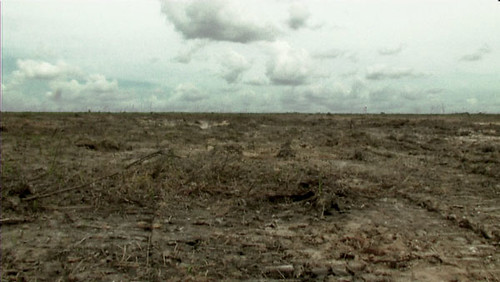
This land was rainforest last year. Borneo 2005


Palm oil needs to be labelled on all products that contain it, and palm oil must be sourced responsibly. We as consumers should not be in a position of contributing to needless destruction each time we shop. It is the clear responsibility of the supermarkets to pressure the industry and find palm oil from non-destructive sources.
In the letter below please
- type your name and return address
- copy and paste the supermarket addresses provided
- print the document out
- sign it
- post it off today

Simple!

Letter writing campaigns have proven to be very effective in the past and we believe this will make a bigger impact than yet another circular email ever would. For the cost of an envelope and a stamp, and a few minutes of your time, you are playing a vital role in preventing the eradication of yet another species.

You can send a letter to one supermarket or to both of them - it's up to you - but the more companies you write to the greater the impact and the more chance we have to save the Orangutans! We would like to point out that since starting this campaign ASDA, Waitrose and Sainsburys have all signed up to the Roundtable on Sustainable Palm Oil which is brilliant. We just need Tesco and Morrisons to follow this good example.

One final request (optional but very helpful). Please can you send an email addressed to Nick or Evie at cockroachproductions@gmail.com letting us know which supermarkets you have sent letters to. This will allow us to track how many letters each of the supermarkets receive and help us bring pressure to bear on them.
Addresses

Tesco
Sir Terry Leahy
Chief executive
Tesco House
Delamare Road
Cheshunt
Hertfordshire EN8 9SL

Morrisons
Sir Kenneth D Morrison CBE
Executive Chairman
Wm Morrison Supermarkets
Plc.Thornton Road
Bradford BD8 9AX

The Letter
____________________________________________________

Your Address

22nd October 2005

The Supermarket Address

Dear Sir or Madam,

It has recently come to my attention that, as a direct consequence of my actions as a consumer, the Orangutan is in imminent danger of becoming extinct. As a regular customer of yours I would like you to help me make informed purchase decisions and help prevent this wonderful species going into terminal decline.

Palm oil is used in 1 in 10 of all consumables sold in British supermarkets (though it is often labelled as vegetable oil). Two of the main areas where it is produced are Borneo and Sumatra – the only two islands where orangutans still exist in the wild. Rainforests are being converted to oil palm plantations at an alarming rate, despite the existence of over 25 million hectares of previously-cleared land In Kalimantan (Indonesian Borneo) alone. The rainforest targeted for new plantations is the last remaining habitat of species such as the Orangutan which, at the current rate of population decline, are likely to be extinct by the end of this decade. Not only is the Orangutan threatened by loss of habitat, but palm oil plantation workers are also deliberately killing animals when they enter plantations, as they are perceived to be a threat to their crops.

Many hardwood products carry labels that show that they have not been sourced from fragile rainforest. In a similar way, I would like your company to clearly label products containing palm oil sourced from plantations that have not involved forest conversion, and withdraw palm oil based products that you cannot guarantee have come from sustainable sources. I have written to all the major British supermarkets and think that it would be very good PR for you to be the first to take a strong moral stance on this issue.

I do not believe that your company is aware of the role that it is playing in forcing the Orangutan to the brink of extinction (this issue has only recently come to light) but for further background information please see:
http://www.cockroach.org.uk/
http://www.sustainable-palmoil.org/
http://www.palmoil.org.uk/
www.helenbuckland.co.uk/palm/
http://www.safepalmoil.org/

Also please see below some shocking facts that I hope will encourage you to take immediate action.

I look forward to receiving information on your company’s policy regarding palm oil. If a policy does not already exist, please tell me what steps you will be taking to ensure that I can shop in your store safe in the knowledge that I am not contributing to wiping out yet another species.

With thanks in advance,


Your Name

Killer facts:

According to the Indonesian Forestry Department the Orangutan population in 1990 was 200,000. In the year 2000 there were only 50,000 Orangutans left. Their demise is directly attributable to the encroachment of the palm oil plantations on their habitat.

The Bornean Orangutan Survival Foundation estimates that if palm oil concessions continue to replace forest at the current rate then within 3 years a viable future for the orangutan in the wild will be impossible. This means that by 2008, if action is not urgently taken, then Orangutans will have reached the point of no return.