Friday, May 12, 2006

BBC1 16:30 Really Wild Show, Weds 17th May

Palm Oil story reaches a Younger Generation

Those of you in the UK keep your eyes peeled for the Really Wild Show on the BBC this Wednesday (May 17th) at 4:30pm. The show will feature a special report on the palm oil industry and its negative implications for the protection of rainforests and biodiversity in Indonesia and Malaysia.


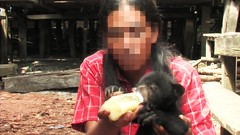
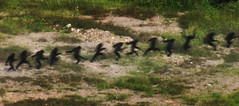
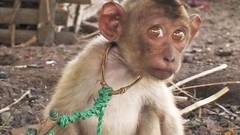
Some of the footage shot by Cockroach Productions on location in Borneo and Sumatra will be included in the report, including rare film of a captured baby sun bear, a baby macaque being kept as a pet in a palm oil plantation in Central Sumatra, and an unusual shot of a (completely arboreal) gibbon running bipedally across cleared forest land.


Hopefully the show will inspire a new generation of budding conservationists to join the campaign.

Tuesday, May 02, 2006

Orang-utan campaign heads to Westminster

Tuesday, 02 May 2006 08:35 Copyright InTheNew.co.uk

Orang-utan campaign heads to Westminster

Leading members of Britain's campaign to save endangered orang-utans are to lobby MPs at a Westminster reception this evening.

Hosted by Lib Dem MP Norman Baker and organised by Friends of the Earth, the event will be attended by prominent orang-utan campaigners including celebrity actress Joanna Lumley.

They will attempt to highlight the plight of the orang-utans, whose rainforests are being steadily destroyed by Britain's demand for palm oil, in an attempt to gain changes to the company law reform bill currently passing through parliament.

"Demand for palm oil is threatening the survival of these fantastic creatures and it is shocking that our demand for cheap food and other products is behind this," Mr Baker, the party's environmental affairs spokesperson, said.

"I believe we must take this opportunity to use the company law reform bill to ensure that UK companies take more responsibility for the impacts they have on the environment."

At present British supermarkets including Tesco, Somerfield and Morrisons are refusing to subscribe to an agreement on the "sustainable use" of palm oil, showing a disinterest the bill could forcibly change.

"The growth in demand for palm oil is putting pressure on precious areas of rainforest in Borneo and Sumatra, threatening the survival of the orang-utan," Friends of the Earth oil campaigner Ed Matthew said.

"MPs have the power to do something about this and we urge them to take this chance."

Palm oil, harvested from the rainforests of Borneo and Sumatra, can be found in one in ten products sold in Britain's supermarkets.track
_____________________________________
The Orangutan Film Protection Project Team from Cockroach Productions will be attending this event and showing a video report from Indonesia, highlighting the plight of orangutans and local people in the face of the growing palm oil industry. Our hope is to rally British Government support for the sustainable sector of the industry, being led by the Roundtable on Sustainable Palm Oil.

Find out more at www.cockroach.org.uk
Tuesday, April 25, 2006

Orangutans WILL go home!

Subject: RE: Press release - Orangutans will go home!


53 of 61 smuggled orangutans will be sent home soon

April 23, 2006

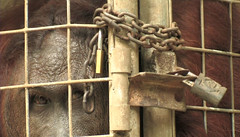
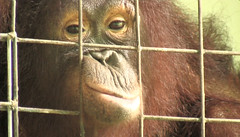
On Saturday the 22nd of April 2006, officials from Thailand's Department of National Parks, Wildlife and Plants announced their decision to allow 53 smuggled orangutans to go back home to the forests of Indonesia. The decision was made during a meeting between Thai and Indonesian officials in Bangkok. A large group of NGO's worldwide campaigned hard to have the Apes repatriated after two and a half years being kept in sub-standard conditions at Safari World, Bangkok and wildlife breeding centers in Thailand. The pressure of the campaign, which was stepped up only six months ago, finally bears fruit.


Although the Thai authorities still want to check DNA of all the orangutans to verify that the animals originate from the Indonesian part of Borneo, scientists and experts believe all but two are from this area. Two of the orangutans might be Sumatran orangutans and therefore also Indonesian. The Indonesian authorities have agreed to allow the second DNA test so long as it does not delay the repatriation process. The animals will be returned to Indonesia before the results of the DNA check are available. Two years ago, DNA tests, financed by the Borneo Orangutan Survival Foundation (BOSF) in cooperation with the Thai Forestry Police, were conducted to prove that these same orangutans were not born of the legal orangutan stock at the zoo.


The 53 orangutans will all be moved to the Nyaru Menteng Orangutan Rehabilitation Center, run by the Borneo Orangutan Survival Foundation. It is expected that the first half of the orangutans will be shipped back to Indonesia within the next eight weeks; a second group should follow within four weeks after the first. Due to the level of care required for each individual animal, transporting too large a group at one time will be too stressful for the animals.

Veterinary and orangutan experts from BOSF and the Indonesian government will soon begin a thorough health assessment to check all the orangutans for zoonotic diseases such as tuberculosis and hepatitis, as well as the presence of parasites, bacteria and fungi. Local Thai universities such as Chulalongkorn and/or Mahidol might be asked for assistance with this process. If animals are not 100% healthy, the stress of transportation might be detrimental and, in some cases, fatal. The healthiest ones will be returned with the first lot.


At Nyaru Menteng, all facilities are ready to welcome the orangutans back home; a quarantine area and new living quarters have all been constructed in the past two years awaiting the return of these orangutans.

The fate of eight additional orangutans held by the Thai authorities confiscated from Lopburi zoo and two slaughterhouses in 2003 is not yet known.

For more information and pictures:

Edwin Wiek
Monitoring unit for cross-border illegal wildlife trade
Borneo Orangutan Survival Foundation
edwin.wiek@wfft.org
Wildlife Friends of Thailand (www.wfft.org)
Tel +6690600906 (Thailand 0906-00906)

Dr. Willie Smits
Borneo Orangutan Survival Foundation / Gibbon Foundation
wtmsmits@indo.net.id

Lone Droscher Nielsen
Director
Nyaru Menteng Orangutan Rehabilitation Center
Project.o-u@lycos.com
Tel: +62-8125154702 (Indonesia 081-25154702)

All photographs Copyright Nick Lyon & Evie Wright
The Orangutan Film Protection Project
www.cockroach.org.uk
Tel: +44 (0)1823 451 790

Wednesday, April 19, 2006

Better Late than Never

Well done Sainsburys for joing the Roundtable on Sustainable Palm Oil! After an announcement at the end of January, Sainsburys have finally filed their application for the RSPO and, in doing so, joins the likes of ASDA, Waitrose and Marks & Spencer in the growing list of retailers that recognise the importance of taking responsible action on sustainable sourcing of products.

This announcement follows shortly after the publication of a scientific study of latent extinction hotspots that identified the Indonesian-Malaysian forests as being under the greatest threat in the world. Sustainable Palm Oil means an end to conversion of high conservation value forest. Please do your part to support the retailers who take up this innitiative.

Wednesday, April 12, 2006

Mega Plantation Border Project!

Demand for palm oil triggers massive expansion in Borneo

Source: Friends of the Earth: Apr 12 2006


A new report released today (Wednesday 13 April) reveals how the Indonesian government could develop up to three million hectares of oil palm plantations on the island of Borneo, threatening wildlife and local livelihoods to cater for international demand for cheap palm oil [1].

One of the justifications given for this huge plantation project is the increasing international demand for palm oil to be used in food, feed and biofuels.

The report reveals how earlier plans to develop a two million hectare plantation on the Indonesian side of the border with Malaysia, are not yet off the table. Indonesia's initial proposals to develop the border area had met with international protest. The Indonesian president Yudhoyono acknowledged there were conservation concerns to be taken into account. But the Indonesian Ministry of Public Works appears to have responded to this in January 2006 by simply enlarging the area defined as the "border zone". In this broader area, up to 3 million hectares of oilpalm could be planted, according to the Ministry.

The project still threatens mayhem, damaging wildlife including threatened populations of orang-utan and elephants, and the livelihoods of local people in the Kalimantan region. Friends of the Earth Indonesia (WALHI) and local palm oil organisation Sawit Watch ('Oilpalm Watch') are calling on the Indonesian government to officially cancel the border mega-plantation plan.

The new report reveals that the area deemed suitable for oil palm includes forests used by thousands of people who depend on them for their livelihoods. In new larger border zone, a special regulation (Presidential Decree No. 36/2005) would allow the government to take land away from communities that do not want oil palm plantations in the name of 'public interest'. The report shows that those communities who are aware of the new proposals are strongly opposed to the plans.

Evidence shows that in the last decade, many areas have been deforested supposedly to make way for oil palm plantations but have then been abandoned after the timber has been sold. In East Kalimantan alone, 3 million hectares of forest disappeared for oil palm concessions. Of those, only 300.000 hectares have actually been planted with oil palm.

Sixty per cent of the forests converted into oil palm plantations in 2004-2005 were still good forests, despite the commitment made by the Indonesian government in 2000 that no more forests would be converted to palm and pulp plantations.

"Communities should not be forced to change their livelihoods simply for the benefit of oil palm companies and consumers overseas. They have not been consulted on these proposals and certainly have not agreed to abandon their land," said Rudy Lumuru of Sawit Watch, in the Netherlands to present the report.

'European importing countries should not increase their imports of palm oil until environmental and social issues are solved,´ added Anne Van Schaik of Friends of the Earth Netherlands. 'This also means we should be very hesitant to embrace palm oil as a biomass-solution to the current energy crisis. To start with, companies and governments should ensure that palm oil used in food and feedstock is in line with the criteria laid out by the so-called Roundtable on Sustainable Palm Oil as soon as possible," said Van Schaik.

Note

[1] The Kalimantan Border Oil Palm Mega Project (PDF)

Tuesday, April 04, 2006

Marks & Spencer Join the RSPO

Thank you Marks & Spencer for taking a positive step forward for orangutan conservation by signing up to the Roundtable on Sustainable Palm Oil.

M&S are following in the steps of other major retailers such as ASDA and Waitrose to show concern for SE Asian environmental impacts and moving towards not purchasing unsustainable palm oil that leads to forest conversion. We hope this is the first step in a number of measures that can be taken by companies to minimise their impact on our endangered red cousins.

Friday, March 31, 2006

Cockroach success at the Celtic Film and Video Festival!

Falmouth, March 2006

Cockroach felt a burst of pride when Nick took part in the live pitch competition at the Celtic Film and Video Festival in Falmouth, Cornwall, last week and won.

Our pitch – for Radio Gibbon, 99.5 FM a film about Radio Kalaweit and the gibbon sanctuary run by Frenchman Chanee in Central Kalimantan – was voted the winner against 5 other live pitches (and these 5 had already been selected from a much greater number of entries in the selection phase).

Kalaweit Logo 2

Radio Gibbon
won a landslide victory in the audience vote. The audience to the competition was made up of industry professionals, producers, commissioning editors, and festival delegates, as well as being webcast live. The event was preceeded by a three-day long pitching course run by Christina Burnett from Wide Eye Pictures, during which Nick had the opportunity to really fine tune and perfect the pitch. We’re hoping the exposure and insight which the event gave us will help to get the film commissioned.

Here’s an extract from the pitch:

Radio Gibbon is a journey through the cultural, musical and natural heritage of Borneo with an amazing and charismatic man who has made his life here on the frontiers of conservation.

In 1997 a young Frenchman, Aurelien Brule, applied to the Indonesian government in Jakarta to found a radio station in Central Kalimantan. Less than a decade later Radio Kalaweit is the most popular radio station in Borneo. Through the story of this radio outpost, its listeners, and Brule’s gibbon sanctuary island, we explore the most remote parts of Borneo – areas where radio is a vital link to the wider world.”

If you are interested in finding out more about our idea for the film contact us at:
info@cockroach.org.uk or telephone +44 (0)1823 451 790
Or if you would like to help our friends at Kalaweit go to:
www.kalaweit.org
and donate generously!!!

Friday, March 24, 2006

Cockroach Productions wins National Recognition

Cockroach Productions' Orangutan Film Protection Project has won a Special Commendation from the British Environment and Media Awards for their media work on the Orangutan and Palm Oil Story. Through national and international news broadcasts the team at Cockroach, with the support of their friends in the Ape Alliance, have reached an audience of 86,000,000 people worldwide with the story. Further national broadcasts on mainstream terrestrial televison are scheduled for the coming months.

OFPP logo v.2

Alistair McGowan presented the awards at a dinner ceremony, where other attendees included the BBC, Channel 4, The Independent, The Sunday Times and Friends of the Earth. We were pleased to see our 'Orangutan Friendly Palm Oil' logo come up on screen - re-enforcing the message to a captive audience of fellow environmental reporters. We also took advantage of the evening to spread the word on the orangutan and palm oil crisis, and hope we can keep the story in the forefront of people's minds in the coming months.

Alistair McGowan presents the BEMAs

Sunday, February 19, 2006

On the trail of the Tiger

Saturday 6th August 2005

The last two weeks in Sumatra have been exhausting but exhilarating. We left Jakarta early one morning, accompanied by Pak Wald and Pak Daniel of the Sumatran Tiger Conservation Program, and began a four-day journey up impossibly bumpy roads to the forests of central Sumatra. En route we took in a ferry journey passing Krakatoa in the distance, stopped over at the elephant training centre in Way Kambas, and passed through the concrete skyscrapers that dominate the villages where bird’s nest soup is the primary industry. After three days circumnavigating the many potholes of the trans-Sumatran highway, we eventually arrived at the office of the STCP. That evening we were introduced to the rest of the team and were shown a small sample of the thousands of photos they have collected from their camera traps in the forests, including tapir, clouded leopards, porcupines, deer, elephants, and, of course, tigers. Pak Wald and Pak Yunus, the STCP field manager, then showed us some of the STCP’s recent confiscations – tiger and leopard skins, bones, and teeth.

BTNP, Sumatra

The next day we traveled to some of the palm oil plantations that surround the borders of the forest where the STCP’s Tiger Protection Units run their patrols. Approaching one plantation we managed to get some shots of a huge illegal saw mill just off the road, and talked to a rubber-tapper and his family whose livelihood is threatened by the continuous expansion of palm oil monoculture. Arriving at another plantation still being established nearby, Pak Wald was shocked to find how quickly the forest had been cleared – the area had still been forest when he had last visited, just weeks earlier. On our way out of this plantation we encountered two workers carrying an Argus Pheasant that they had recently captured on the outskirts of the plantation. The Great Argus is a CITES Appendix-I listed endangered species. The unfortunate bird we met had its eyes stitched closed to “keep it calm”. The workers expected to make around £14.50 from selling it. We resisted the temptation to buy this bird from them in order to set it free – our doing so would only mean that word would get round that foreigners were paying for animals and would compound the problem.

Great Argus Frame 3

Later, in yet another plantation, we came across a baby macaque being kept as a family pet and tethered by the neck on an extremely short rope. It is likely the macaque faces a bleak future – a macaque is almost certain to be killed by others in the group if released into a wild population. It felt like every way we turned there were animals that faced similarly uncertain futures as their forest disappears to make way for palm oil.

frame1

The next couple of days were spent more happily. We traveled to the STCP base within the forest borders and from there we were able to film siamang whooping through the treetops, and witness the spectacular site of hornbills swooshing and honking overhead. We spent a couple of days trekking the jungle trails with the team, filming the set up of the camera traps and looking for snares set by poachers. We were lucky enough to come across some tiger prints, including some left fairly recently by a tigress and her cubs.

BTNP with Hornbill Flight

Members of the tiger team are recruited only after rigorous jungle training, and although by now fairly acclimatized to the 33 plus degree heat, we found it hard to keep up with the speed with which they move through the forest. They decided we looked like Ninja Turtles due to the big camera cases we were heaving around on our backs, and I think that our obvious discomfort kept them entertained during the periods of time when we needed to stop and take a rest.

That evening we went to meet and interview a man who is known locally as Pak Harimau – Mr Tiger. This man, a small wiry 70-odd year old, claims to have killed 182 tigers over a long career of poaching. On five occasions, the tigers fought back. As his many grandchildren crowded round to listen, Pak Harimau told us the story of how the last tiger to do so dragged him 150 metres by his head. He showed us the horrific scars he bears from this encounter. Nevertheless, although he is now reformed, you get the impression that despite his age and his terrifying experiences he would resume his old career without a second thought if it became legal. He was quite a formidable character.

Tales of Tiger Hunting

Life with the Talang Mamak

Monday 15th August 2005

The next day brought with it another early start as we set off for a Talang Mamak village deep within the forest. Accompanied by Pak Yunus, Andi from the Department of Forestry, and four of the STCP – Pak Muji, Mario, Toto and Hendra, we set off by 4x4 on a deeply gullied track. Luckily Mario, Toto and Hendra had their motorbikes, because we were not long into the journey when the car gave up. It was then a case of ferrying the eight of us, plus food, camera equipment, a generator and gasoline deeper into the forest before all signs of a track disappeared. The team took everything in their stride and with great humour. Everyone had a good laugh at Nick’s expense when he was pitched off the back of the bike as it reared up a particularly nasty rut. With a huge rucksack on his back he got wedged in a gully in the road, legs waving in the air. After hiding the bikes in the forest we continued by foot.

Hornbill at dusk

We arrived at the village just as the light was beginning to fade, after a long and hot five hour walk. The villagers are familiar with the tiger team now – the patrols pass through regularly – although Pak Yunus tells us that the first time he came here a woman ran away screaming when she saw him, thinking, due to the military-style clothing warn by the Unit, that he was part of an invading army. The village is still very isolated and the villagers almost completely self sufficient. They survive on what the forest has to offer them, and they manage to do so sustainably. Yunus tells us that the first time he visited the village there was not really any concept of money. Everything cost 5,000 Rp – one fruit cost the same as ten of the same fruit. With a growing involvement in life outside the forest, money has become more important and villagers can now raise some hard currency by selling the sap that they collect from a rare and particularly valuable sort of rattan that grows locally. A villager is taxed if they kill the plant when they harvest, and fined one goat.

Talang Mamak Hunter

We spent a few days staying at a house in the village that, confusingly, had no walls but did have doors and windows with padlocks and shutters. When we asked why there were doors and windows but no walls, the team laughed and admitted they had not noticed this before. During our stay we got to know several of the villagers including the chief, his son, and the teacher. We swam in the beautiful and pristine river that passes by their doorsteps, and ate what tasted like delicious feasts cooked up by Mario, although they mostly consisted of supernoodles, kecap, and edible bracken picked from the forest. Pak Muji was asked to fix the village’s new TV, the first and only one, powered by the village’s one generator. We understand that someone had inadvertently killed the colour with on of the dials. When the colour was successfully returned, Pak Muji was hailed as a healer. The village now has a school, which Pak Yunus was instrumental in setting up a few years ago, but as yet literacy is still very low. Yunus told us that everyone in the village smokes, except one person, and we even saw very small children smoking. Life expectancy here is well below the national average.

We made the journey out of the forest by dugout canoe, traveling downstream for two days with Pak Yunus, Andi, and the Chief and his son (Mario, Toto, and Hendra traveled out of the forest on foot). The chief displayed his amazing knowledge of the local area and ecology – he was able to name every subspecies of Meranti, and knew every ladang (small forest clearing) by name. Meanwhile Andi entertained us with enthusiastic renditions of virtually every Phil Collins song ever written (during- and post-Genesis) as well as sharing his anecdotes of his time working at Tanjung Patung National Park in Kalimantan, where he was stationed during the making of the now fairly infamous Julia Roberts Orangutan film.

BTNP, Sumatra

Pak Ari, an STCP driver, picked us up in the jeep further downstream where the river meets a track. The journey back to the main road was not plane sailing once we were back in the jeep however – unfortunately, although perhaps quite suitably – a palm oil truck was stuck in the mud and had blocked the road. It seemed a fitting conclusion to our final day of shooting.

Monday, February 06, 2006

Waitrose Ltd. Join the RSPO

After months of campaigning British supermarkets are beginning to agree with conservation groups that the future of the orangutan and sustainable palm oil is the responsibility of the entire supply chain. Waitrose have now followed ASDA in signing up to the Roundtable on Sustainable Palm Oil. For those of you who have been kind enough to support our work through writing letters to the supermarkets you can now stop writing to these two companies, or perhaps you may want to write to them to thank them for taking this positive step.

We are still waiting for Morrisons to write replies to all the letters that have been sent to them. Not one of the many people who have written to all the major supermarkets have let us know of a reply from Morrisons. We are also still waiting for Tesco to join the RSPO. Tesco are the biggest supermarket in the UK and with expansion across the globe, an announcement of this kind would send a big signal to producers in Malaysia and Indonesia. The RSPO is working hard to make sustainable palm oil a reality, we need to do our part to help the industry realise this. We are not talking about sustainable palm oil as a niche product. We want non-destructive palm oil to be the only type available on the market. The RSPO is the best mechanism to allow this to happen.

Wednesday, January 11, 2006

A film that could save lives

A TRAINING VIDEO TO PROTECT ORANGUTANS

CALL FOR BRITISH COMPANIES TO GET INVOLVED

"The great apes are our kin... Sadly, however, we have not treated them with the respect they deserve, and their numbers are now declining, the victims of logging, disease, loss of habitat, capture, and hunting... Great apes cannot be conserved for free... We need ordinary people in their millions to love an protect them. We need governments and companies to 'adopt' them and the places where they live. We need to turn the tide of extinction that threatens our nearest living relatives."

Kofi A. Annan
Secretary-General of the United Nations
World Atlas of Great Apes and their Conservation, 2005

If you’ve been following our site, you will already know that orangutans are under serious threat when they are found in oil palm plantations. The Sumatran orangutan is vying for the unenviable position of being the first great ape likely to go extinct within our lifetimes. We need companies to do their bit for great ape conservation - one way they can make a huge difference is to back the project we are proposing below, an idea the orangutan conservation organisations who would be involved are desparate for us to make.

We are developing a training video that will inform plantation workers what to do when they encounter an orangutan in their plantation. Working in collaboration with the Sumatran Orangutan Society and the Borneo Orangutan Survival Foundation we plan to make a health and safety style training video which we will be shown to workers in the oil palm plantations. The video will be an easy and effective way for plantation workers to learn what to do when encountering an orangutan.

The majority of plantation staff are migrant workers from Java or Sumatra, so unlike the native Dyaks, they are not familiar with the orangutan (Orangutans in Sumatra are restricted to such small ranges now that few Sumatrans have encountered them). Many workers have a false impression of the orangutan as a ferocious animal that poses a direct threat to their safety – a hangover, according to Dr. Birute Galdikas, stemming from the popularity of the original King Kong movie in Indonesia which will no doubt be exacerbated by the recent remake of the film.

The safety video will work to introduce workers to the orangutan in its true colours. It will include simple step-by-step instructions of what to do when an orangutan is spotted on a plantation, emphasizing the point that the workers should NOT try to capture or tie down the orangutan in any way. The reason that many orangutans are already seriously (often fatally) wounded before the rescue teams can reach them is that, despite having taken steps to alert the rescue team to the presence of the orangutans, the plantation workers have nonetheless undertaken to capture the animal themselves prior to the arrival of the team. A mature orangutan is immensely strong – it is almost impossible to tie up or capture an orangutan without first beating it unconscious. In order to stop this happening, the safety video will focus on giving clear instructions of which rescue centre to contact – these will be location specific – and will then recreate what will happen when the rescue team arrives. It will also provide information and images regarding the potential transmission of diseases between humans and orangutans should they come into contact with each other.

We intend that the video be made as a reconstruction of an orangutan rescue, filmed using members of the Borneo Orangutan Survival Foundation rescue team as well as plantation workers. Karaoke is very popular across Kalimantan, and so DVD and VCD players are very common – distributing DVD and VCD copies of this simple film across the plantations offers a straightforward, effective, and relatively inexpensive means of preventing the many pointless and tragic deaths of orangutan on the palm oil plantations.

We are currently looking for UK-based businesses to help fund and support the production of this film.

SOME BACKGROUND

Orangutans in oil palm plantations

Sometimes orangutans are in the oil palm because there is literally none of their forest habitat left, in which case they will require rescue and relocation. Sometimes orangutans are only passing through as they move between their well known feeding grounds. These orangutans may have been moving between these feeding areas for decades. A new oil palm plantation cutting into their established routes proves a dangerous place to travel. Whilst these orangutans could pass through the plantation to their feeding areas they are often seen as a threat. Some plantation managers have put bounties on orangutans because they see them as crop raiders, but orangutans generally pose little threat to the oil palms. Whilst out on a rescue we found the path made by one cheekpad male. There were a few young palms that had been pulled up, but these were in a straight line between two forest patches – it was clear the orangutan was just passing through and was not a crop raider. Oil palm plantations need to develop wildlife corridors that will allow these orangutans safe passage through their plantations. This will save the few palms that might otherwise get damaged and it will make the orangutans safer allowing them to move through the trees (their natural preference) rather than across the ground.

If you are interested in finding out more please contact us.

Nick & Evie @ Cockroach Productions
cockroachproductions@gmail.com
Tel: 01823 451 790 / 07816 755 128
http://www.cockroach.org.uk/

Friday, January 06, 2006

ASDA joins RSPO

A NEW HOPE FOR ORANGUTANS WITH THE NEW YEAR

HOW THE BRITISH RETAIL INDUSTRY IS STARTING TO RECOGNISE THE IMPORTANCE OF SUSTAINABLE PALM OIL

Conservationists have received good news after a hard year of campaigning on behalf of our South East Asian cousin - the orangutan. The supermarket giant ASDA, second only to Tesco, have taken a positive step forward in corporate social and environmental responsibility by signing up to the Roundtable on Sustainable Palm Oil.


The 3rd meeting of the RSPO held in Singapore at the end of November 2005 saw the members adopt the Criteria for Sustainable Palm Oil Production. In effect this means that there are finally a set of guidelines "…ensuring that production is economically viable, environmentally appropriate and socially beneficial" - see www.sustainable-palmoil.org


Palm oil is present in 1 in 10 supermarket products and demand is rapidly growing in the wake of the transfatty acid scare in the food industry and the growing desire for biofuels.

The Ape Alliance and Friends of the Earth recognized palm oil as the single greatest threat to the future of orangutans in the wild in their September 2005 report The Oil for Ape Scandal.

With all signs indicating that the Sumatran Orangutan could be the first Great Ape to become extinct, it has been British supermarkets that have been the target of environmental campaigns.

The team from Cockroach Productions filmed in Indonesia documenting the palm oil story, where they witnessed first hand the rapid rate of destruction caused by conversion of rainforest for oil palm plantations. On their return filmmakers Evie Wright and Nick Lyon joined the campaign by making an open letter to supermarkets available through their website (www.cockroach.org.uk).


In a pleasing reply to our letter campaign Andy Bond, president of ASDA, wrote "… as a direct result of your letter, we have engaged in discussions with two major organizations - namely Friends of the Earth and the World Wildlife Fund. We hope to assist them over the coming months in identifying the source of this issue and encouraging the development and use of sustainable palm oil."

ASDA are now joining the RSPO following in the footsteps of the Co-op and Boots Ltd. who have already signed up. With three major players on the high street leading the way there is good reason to be hopeful that the British retail sector is listening to the demands of its customers, who do not want to be contributing to tropical deforestation and the demise of the orangutan. With continued consumer pressure we can reasonably hope that the other major retailers will follow suit.

Cockroach Productions has broadcast quality motion footage and high impact still photographs illustrating the palm oil story and the plight of the orangutans. We are also available for interview, having recently returned from several months on the ground in Indonesia following the story.

Contact: Nick Lyon or Evie Wright @ Cockroach Productions
Tel: 01823 451 790
Mobile: 07816 755 128


Friday, December 02, 2005

PALM OIL SETS CO2 TIME-BOMB TICKING

HOW PEAT FIRES ARE SET TO ACCELERATE GLOBAL CLIMATE CHANGE AND SEAL THE ORANGUTAN'S FATE
___________________________
We have seen in the past weeks how the polar bears are unable to reach their hunting grounds with the freeze being unseasonably late. It appears that the fate of the orangutan and polar bear – despite their vastly different existences – might run in parallel. Loss of orangutan habitat is driving the loss of polar ice. In a year of terrible floods we can recognize the human risk implied by global warming.

Over the next two weeks Montreal hosts the United Nations climate conference. One key issue that will be discussed is whether the Kyoto protocol should be revised to afford incentives for the protection of existing forest. Currently Kyoto only makes provisions for reforestation and aforestation. Whilst fossil fuels are seen as the driving force in Global Climate Change and the principle source of Greenhouse Gas emissions, there is another vast carbon source on the verge of being released into the atmosphere, with none of the benefits of fossil fuel combustion. 30% of terrestrial carbon reserves are locked up in peatlands. Indonesia holds 50% of the earth's peatswamp forest.

This means Indonesia's peat swamps are of global importance.These forests not only hold thick peat up to 20 metres in depth, but are one of the last refuges for the endangered Bornean orangutan, with only 50,000 individuals remaining, and critically endangered Sumatran orangutan with only 7,300 individuals left. Sumatran tigers, rhinos, and elephants are also at risk.

Destruction of lowland forest for conversion to oil palm plantations has been so rapid that developers are now turning their attention to peat swamp forests.These are an important component of the ecosystem dueto their function in absorbing excess water during thewet season, and releasing this stored water during the dry season, reducing the likelihood of floods and forest fires respectively. It is notoriously difficult to cultivate oil palms on peatland greater than 1 metre thick, and the costs of establishing a plantation on this soil type tend to be 40 per cent higher than on dry land. Although this land is not suitable for oil palm cultivation, it still holds valuable hardwood timber. The companies seek legal permits for plantation development in order to benefit from quick profit through unsustainable forest clearance. Past evidence shows that palm oil may not be developed after clearances – because of fire risk and unsuitable land. The peat is too soft to use heavy machinery to extract logs – one of the reasons that the land is unsuitablefor palm oil development – so logging canals are duginto the peat to extract the logs. The logging canals drain the peat domes and what is left is a tinder-box time-bomb of carbon-rich bio-matter.

The vast quantities of CO2 released in the 1997-98 forest fires in Indonesia will be dwarfed if palm oil moves into these vast expanses of peat. But that is what is set to happen. Proposals are being approvedright now. Indonesia is struggling to improve its economy and investment in palm oil is attractive, but the industry is not sustainable under current patternsof expansion. Millions of hectares of degraded and cleared land stand unused as more forest is cleared for quick timber profit.

NGOs are putting pressure on the palm oil industry to recognize the short-term perspective being employed. Last week in Singapore the palm oil industry's self-regulation initiative – the Roundtable forSustainable Palm Oil (RSPO) - approved a set of principles and criteria for the sustainable production of palm oil. This is a positive first step, but NGOs are concerned that the 2 year process of development before implementation of these guidelines might not be quick enough to save the peat swamps and their diverse inhabitants. The clock is ticking on the CO2 time-bomb…

___________________________

Cockroach Productions has broadcast quality motion footage and high impact still photographs illustrating the palm oil story, the little known world of peat swamp forests and the plight of the orangutans. We arealso available for interview, having recently returned from several months on the ground in Indonesia following the story. ___________________________

Contact: Nick Lyon or Evie Wright @ CockroachProductions
Tel: 01823 451 790Mobile: 07816 755 128
Email: cockroachproductions@gmail.com
Web: www.cockroach.org.uk
For more images relating to the story see:
http://www.flickr.com/photos/cockroach/sets/1077630/

PRESS RELEASE – COCKROACH PRODUCTIONS Friday 2nd December 2005

Monday, November 28, 2005

Another Crude Oil - Taster Poster


All images copyright Cockroach Productions 2005
For further info please contact Nick or Evie @

tel: 01823 451 790
email: cockroachproductions@gmail.com

Montreal addresses Global Climate Change

Today marks the first day of the United Nations climate conference in Montreal. Whilst the agenda will address how the goals of Kyoto will be met within the first period (expiring in 2012) we are more interested in what they will be discussing for the longer term. At present Kyoto makes no economic provisions for preservation of existing forest, rather it rewards reforesting (replanting of natural forest) and aforestry (growing plantations on land that is no longer forested). Whilst this was set up to develop a proactive solution to CO2 emissions, time is telling us that huge tracts of valuable forest are being lost because of their exclusion from Kyoto.


Valuable timber is the real reason much of the peat swamps are being cleared. The land is not suitable for oil palm development


Is reforestation more important that forest protection?


Our hopes for Montreal are that issues of forest preservation will be addressed and factored into the second period. One might hope that emergency protocol could be called into effect, because by 2012 we may well have lost much of the natural forest cover we are striving to protect – but this seems unlikely. It is important to note that preservation of forest goes above and beyond the importance of protection of traditional lifestyles and preservation of species. We at Cockroach are working hard to champion the causes of forest peoples who appear not to be in control of their futures as palm oil moves into their traditional lands. We have recognized the desperate plight of such charismatic and endangered species such as the orangutan, the Sumatran tiger, the jungle elephants, the
gibbons and siamang… the list goes on. But perhaps there is a reason closer to home that might end up being what saves Indonesia’s natural forests…


Bulldozers 'should' be used to clear vegetation for plantations on dry land, clearance by fire is illegal. On peat the ground is too soft and tha machines would sink. This means that fire is often used, and this is a CO2 disaster as the fire penetrates peat that runs 20 metres thick in some places. Burning for plantation clearance is illegal, but happens time after time, even in dry forest, because it is cheaper than using machines.


Peat Swamp, and what it should mean to us.


Whilst forest people and exotic species might captivate the interest of the public, there is a geographical remoteness that might let them fall from consciousness when overrun with the priorities of our busy lives. There is another factor closer to home that we should be recognizing. Animals and people might be losing their homes on the other side of the world, but we are suffering directly as a result. The case for global climate change grows stronger with each passing year. General scientific consensus supports the claims that the planet is warming, and the risks associated with this are well known. Indonesia is a special case. Not only does it harbour magnificent rainforests that we rely on for oxygen production, but it holds huge reserves of carbon, locked up in biological matter called peat. 30% of terrestrial carbon is locked up in peat, and Indonesia holds 50% of the worlds peat swamp. These areas are now under threat. Palm oil is THE major threat. Concessions of forest for conversion to oil palm plantation are logged out. The peat dries without its protective forest cover, compounded by logging canals draining the peat. With these peat swamps facing conversion we need to raise the question – shouldn’t Kyoto have made provisions to protect this carbon dioxide timebomb? We can only hope that Montreal will address this issue.


We witnessed thousands of trees being floated down the rivers of Borneo. These beautiful waterways are now like a funeral procession. It is heartbreaking to see. Very little primary forest borders any of these rivers anymore. Access is key.

Thursday, November 24, 2005

A future for sustainable palm oil? A future for orangutans?

Good news from the 3rd meeting of the Roundtable on Sustainable Palm Oil that has convened over the last few days in Singapore. There was overwhelming support for the Criteria for Sustainable Palm Oil and as such the criteria have been agreed upon and industry has taken a vital step forward in stemming destruction of orangutan habitat.
The Roundtable was founded through a partnership between WWF and Unilever in the first instance. Numerous members have now signed up from different sectors of the industry. We are still pushing for British retailers to sign up to the RSPO, but the signs are that the tide is changing and UK corporations are beginning to see the value in pursuing a more responsible route for palm oil procurement.
Here at Cockroach Productions we continue to work to raise awareness of the palm oil situation in SE Asia, and have broadcast quality footage that is available for news broadcasts, current affairs programs and industry awareness programs. Read below to find out more.

Wednesday, November 16, 2005

For Dutch Supporters

For those of you who haven't seen the Dutch news item - it is available for online viewing at the Twee Vandaag website

For those of you who saw the news piece on Twee Vandaag in Holland please follow this link to find out how you can help to save the orangutans who are currently losing their habitat to oil palm plantations. BOS Netherlands
"Leefgebied orang oetan verdwijnt snel
"Het eten van chips en koekjes draagt bij aan het uitsterven van de orang utan: de palmolie die hierin wordt verwerkt komt veelal van het Indonesische Borneo. En om de productie van die olie op peil te houden, worden miljoenen hectares tropisch regenwoud gekapt."
To learn more about what we filmed, read below.

Sunday, October 23, 2005

Make yourself heard. Speak up for the orangutans.

Call to Action!

Please write to any and all of these addresses, requesting that the management immediately addresses the palm oil crisis and the destruction of prime habitat for orangutans. 25,000,000 hectares of already deforested land stands empty whilst areas of forest that we filmed for the documentary are being destroyed right now for palm oil plantations.

This land was rainforest last year. Borneo 2005


Palm oil needs to be labelled on all products that contain it, and palm oil must be sourced responsibly. We as consumers should not be in a position of contributing to needless destruction each time we shop. It is the clear responsibility of the supermarkets to pressure the industry and find palm oil from non-destructive sources.
In the letter below please
- type your name and return address
- copy and paste the supermarket addresses provided
- print the document out
- sign it
- post it off today

Simple!

Letter writing campaigns have proven to be very effective in the past and we believe this will make a bigger impact than yet another circular email ever would. For the cost of an envelope and a stamp, and a few minutes of your time, you are playing a vital role in preventing the eradication of yet another species.

You can send a letter to one supermarket or to both of them - it's up to you - but the more companies you write to the greater the impact and the more chance we have to save the Orangutans! We would like to point out that since starting this campaign ASDA, Waitrose and Sainsburys have all signed up to the Roundtable on Sustainable Palm Oil which is brilliant. We just need Tesco and Morrisons to follow this good example.

One final request (optional but very helpful). Please can you send an email addressed to Nick or Evie at cockroachproductions@gmail.com letting us know which supermarkets you have sent letters to. This will allow us to track how many letters each of the supermarkets receive and help us bring pressure to bear on them.
Addresses

Tesco
Sir Terry Leahy
Chief executive
Tesco House
Delamare Road
Cheshunt
Hertfordshire EN8 9SL

Morrisons
Sir Kenneth D Morrison CBE
Executive Chairman
Wm Morrison Supermarkets
Plc.Thornton Road
Bradford BD8 9AX

The Letter
____________________________________________________

Your Address

22nd October 2005

The Supermarket Address

Dear Sir or Madam,

It has recently come to my attention that, as a direct consequence of my actions as a consumer, the Orangutan is in imminent danger of becoming extinct. As a regular customer of yours I would like you to help me make informed purchase decisions and help prevent this wonderful species going into terminal decline.

Palm oil is used in 1 in 10 of all consumables sold in British supermarkets (though it is often labelled as vegetable oil). Two of the main areas where it is produced are Borneo and Sumatra – the only two islands where orangutans still exist in the wild. Rainforests are being converted to oil palm plantations at an alarming rate, despite the existence of over 25 million hectares of previously-cleared land In Kalimantan (Indonesian Borneo) alone. The rainforest targeted for new plantations is the last remaining habitat of species such as the Orangutan which, at the current rate of population decline, are likely to be extinct by the end of this decade. Not only is the Orangutan threatened by loss of habitat, but palm oil plantation workers are also deliberately killing animals when they enter plantations, as they are perceived to be a threat to their crops.

Many hardwood products carry labels that show that they have not been sourced from fragile rainforest. In a similar way, I would like your company to clearly label products containing palm oil sourced from plantations that have not involved forest conversion, and withdraw palm oil based products that you cannot guarantee have come from sustainable sources. I have written to all the major British supermarkets and think that it would be very good PR for you to be the first to take a strong moral stance on this issue.

I do not believe that your company is aware of the role that it is playing in forcing the Orangutan to the brink of extinction (this issue has only recently come to light) but for further background information please see:
http://www.cockroach.org.uk/
http://www.sustainable-palmoil.org/
http://www.palmoil.org.uk/
www.helenbuckland.co.uk/palm/
http://www.safepalmoil.org/

Also please see below some shocking facts that I hope will encourage you to take immediate action.

I look forward to receiving information on your company’s policy regarding palm oil. If a policy does not already exist, please tell me what steps you will be taking to ensure that I can shop in your store safe in the knowledge that I am not contributing to wiping out yet another species.

With thanks in advance,


Your Name

Killer facts:

According to the Indonesian Forestry Department the Orangutan population in 1990 was 200,000. In the year 2000 there were only 50,000 Orangutans left. Their demise is directly attributable to the encroachment of the palm oil plantations on their habitat.

The Bornean Orangutan Survival Foundation estimates that if palm oil concessions continue to replace forest at the current rate then within 3 years a viable future for the orangutan in the wild will be impossible. This means that by 2008, if action is not urgently taken, then Orangutans will have reached the point of no return.

Friday, October 21, 2005

Little Bigfoot on the run!

Here is a real example of a fish out of water - a siamang forced to come down to the ground to cross a forest clearance to reach better forest patches with fresh leaves and fruiting trees. The siamang is a stunning gibbon found in Sumatra and the Malay Peninsula. Sadly it is endangered and becomming more so as palm oil reduces its natural habitat. Traditional beliefs in central Sumatra prevent people from hunting the siamang. Without their haunting dawn chorus the Rimba people don't believe the sun will rise. Well we will be facing dark days indeed if palm oil expansion and forest conversion continues at its current rate.


This picture is a composite of 13 frames from our film: "Another Crude Oil", documenting the rise and rise of the palm oil industry, and the fall of the rainforests of Borneo and Sumatra. Whilst filmming we heard numerous stories of how palm oil developers were purposefully encircling small patches of forest, cutting them off from the larger stretches and then working their way inwards until animals would make a dash for it. Hunters would be waiting. Not local subsistence hunters, but sport hunters, police and army officials. This is organised hunting of protected species.